Offshore Wind Farm Nordseecluster: First Foundations for Second Phase Arrive – RWE's 1.6 GW Large-Scale Project Takes Shape
Essen – RWE is pressing ahead with construction of the Nordseecluster offshore wind project in the German North Sea. The first ten foundations for the second phase, with a capacity of 900 MW, have arrived in Eemshaven in the Netherlands. The overall project, with a capacity of around 1.6 GW, is due to be fully operational in early 2029.
Nordseecluster B: 60 Foundations for 900 MW of Offshore Wind Capacity
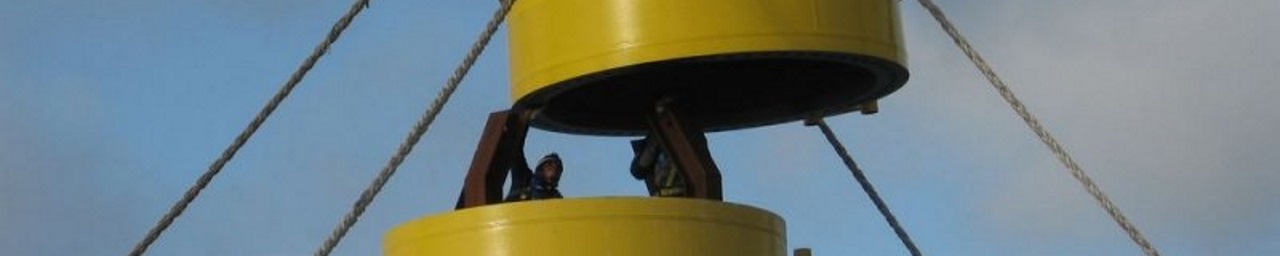
The first ten monopile foundations for Nordseecluster B were unloaded at the Buss Ports heavy-lift terminal in Eemshaven. All 60 foundations are to be handled there by 2027. The steel structures, manufactured by Chinese producer Dajin Heavy Industry, are on average 81 metres long and weigh around 1,350 tonnes each.
Installation of the foundations at sea is due to begin in 2027. Erection of the 60 Vestas wind turbines, each with a capacity of 15 MW, is planned for 2028. Commercial operation of Nordseecluster B is due to start in early 2029. The Federal Maritime and Hydrographic Agency (BSH) had approved the second phase at the end of March 2026.
The port of Eemshaven serves as the central transshipment hub for the heavy offshore components. RWE also intends to use the site for the installation of the Dutch OranjeWind offshore wind project (795 MW) and to achieve logistical synergies.
Nordseecluster A: 34 of 44 Wind Turbines Already Installed
In parallel, construction of Nordseecluster A (660 MW) is progressing. The first phase consists of the sub-projects NC 1 (225 MW) and NC 2 (435 MW). The foundations were installed in 2025, and erection of the wind turbines began in June 2026.
According to RWE, a total of 34 of the planned 44 Vestas turbines had been installed at the time of the presentation of its nine-month results on November 11, 2026. Of these, 17 were already generating electricity. Full commissioning of the first phase is scheduled for spring 2027.
Both phases are being built around 50 kilometres north of Juist. In total, Nordseecluster comprises 104 wind turbines of 15 MW each, with a total capacity of 1,560 MW. Once fully commissioned, it is expected to generate around 6.5 TWh of electricity annually.
RWE Focuses on Long-Term Power Purchase Agreements with Major Customers
RWE intends to market the electricity from Nordseecluster in particular to industrial and technology companies. In February 2026, the group concluded a 110 MW power purchase agreement (PPA) with Amazon for electricity from Nordseecluster B. The agreement is part of a broader strategic cooperation between the two companies.
According to RWE's factbook of August 2026, PPAs totalling 400 MW had already been concluded for Nordseecluster A and B. According to the company, further agreements are to follow before the respective commercial commissioning.
RWE holds 51 percent of Nordseecluster and Norges Bank Investment Management holds 49 percent. RWE is responsible for construction and operation of the wind farms.
Offshore Expansion in Germany: Large-Scale Projects Add Further Capacity
According to the latest IWR analysis of the Market Master Data Register of the Federal Network Agency (BNetzA), a total of 141 offshore wind turbines with 1,925 MW were commissioned from January to October 2026. Cumulative gross offshore wind capacity reached around 11.7 GW at the end of October.
Further large offshore wind projects are currently in various stages of construction. Alongside Nordseecluster (1,560 MW), these include the Nordlicht cluster developed by Vattenfall, with 1,680 MW of turbine capacity. In early November, Vattenfall reported the completion of foundation work for Nordlicht I. Both clusters are due to be fully operational by 2029.
Further offshore expansion depends not only on the completion of ongoing projects. It is also decisive whether new projects can be implemented on an economically viable basis. Following the recently difficult offshore auctions, the Federal Maritime and Hydrographic Agency (BSH) has revised its area planning. The aim is to reduce wake effects between wind farms and improve the electricity yields of future turbines.
As a result, the economic framework for new offshore investments is moving into focus alongside construction progress. While Nordseecluster and Nordlicht offer expansion prospects up to 2029, subsequent expansion also depends on whether planned offshore sites can be successfully marketed under the future auction conditions.
Source: IWR Online, 23 Nov 2026